 Criminal Defense Lawyer Blog


 Each year during the summer, the Maryland State Police releases its uniform crime report for the state of Maryland. The crime report uses data collected from every police jurisdiction in all 24 Maryland counties, but only factors in reported crimes in the report. The Maryland State Police defines reported crimes as actual incidents reported to police by victims, witnesses, and other sources used by law enforcement. Complaints of crime that law enforcement deem unfounded are not included in the reported crimes data. The annual uniform crime report is by no means a complete study of all crime in Maryland. In fact, the report only includes eight umbrella crimes in two separate categories, which are violent crimes and property crimes. A specific crime that does not fit into one of the umbrella crimes is not included in the report. Thus many of the most common crimes in Maryland such as DUI, drug possession, and drug sale are not included. In sum, the annual report is not a study of how many people are breaking the law in Maryland each year. Rather, the report analyzes the crimes that that have the greatest impact on citizens, and gauges how safe we really are throughout Maryland.
The 2011 Maryland uniform crime report was released back in June, and according to the data, reported crimes decreased by almost 5 percent from 2010 to 2011. In 2010, there were 204,916 total crime incidents reported, and this number dropped to 195,517 incidents of crime in 2011. Reported incidents of violent crime in Maryland, which includes murder, rape, robbery, and aggravated assault decreased by almost 9 percent. Reported property crimes, which include breaking or entering, larceny-theft, motor vehicle theft, and arson decreased by a much lower rate, but still trended downward. Last year, for every 100,000 people in Maryland, there were roughly 3,350 crime victims, and 495 violent crime victims.
Continue reading →
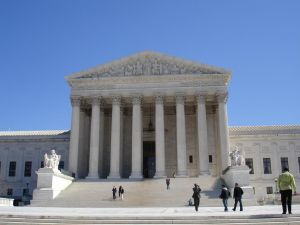 The United States Supreme Court will temporarily allow Maryland law enforcement agencies to resume their post arrest DNA testing policies according to an order signed by chief justice John Roberts. The DNA testing policies allow all Maryland law enforcement agencies to take DNA samples of suspects arrested for violent crimes such as robbery, assault, rape, and homicide. The law also allows police to take DNA from a suspect that is arrested for burglary. Although burglary is not a violent crime, it is a crime that is often only solved when forensic evidence such as DNA or latent fingerprints is recovered from the crime scene. Maryland police agencies are not allowed to take DNA samples upon arrest of suspects that are incarcerated for common non-violent crimes such as DUI, possession of marijuana, and drug distribution.
 A Maryland man was recently the victim of an armed robbery in his home in College Park. Amongst the property the man reported stolen to the police was about $600 of rent money and the man’s stash of marijuana. Yes, you heard that correctly. The College Park man reported to police that the robbery suspects were armed with handguns and had demanded that the man turn over his money and his drugs. The robbery suspects reportedly assured the man that he would not be in any danger if he complied with the request to give up his money and his marijuana. A nice gesture by the armed home invasion robbers, but a gesture that will certainly not help the suspects in court if they are ever arrested. The Maryland man complied and handed over his rent money and an unknown quantity of marijuana, and then the robbery suspects left the house. Police also reported that the armed robbery suspects took laptops and cell phones from the house, but the Maryland man was not aware of this missing property at the time he initially reported the crime to police.
 Baltimore County Police have identified the main suspect in a string of recent Baltimore area burglaries. The burglaries have resulted in the theft of valuable items such as electronic office equipment, black checks, food, office supplies, postage stamps and money. The main suspect is apparently a 48 year old man from Baltimore that has also been implicated in other burglaries throughout Maryland. The recent Baltimore burglaries occurred on or about April 3 and included the breaking and entering of two medical offices. The first office was a podiatry center and the second burglarized office was a medical office used for testing and treatment of hearing disorders. Both offices used and stored valuable medical equipment.
 The last of five suspects involved a string of Baltimore area armed robberies was recently sentenced to prison. Maryland federal district judge Benson E. Legg handed down the 10 and a half year sentence, which also included a 3 year term of probation when the prison term expires. Judge Legg is the same federal district judge who just last month declared a controversial Maryland gun law unconstitutional (
 Recently a controversial Maryland gun law was declared unconstitutional in federal court. The decision left gun supporters and opponents alike arguing over the possible impacts on violent crime such as robbery, burglary, and even murder. The law required all Maryland residents to prove a “good and substantial reason” to be able to legally carry a handgun outside of the home in order to be granted a gun permit. The lawsuit began when a Baltimore man sued the state of Maryland in federal civil court after his application to renew his handgun carry permit was denied. The Baltimore man was joined in the lawsuit as plaintiff by the Second Amendment Foundation, a non-profit organization dedicated to the preservation of the right to bear arms. The plaintiffs prevailed, and provided the case is not successfully appealed, the Maryland legislature must modify this gun law.