 Criminal Defense Lawyer Blog


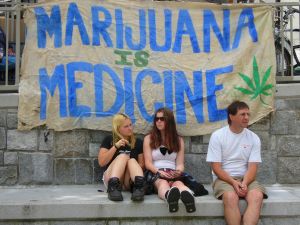 Supporters in the fight to bring legal medical marijuana to Maryland received some uplifting news a few days ago from the governor’s office. While O’Malley did not actually come out and personally support legal use of the drug, he did give the go ahead for his health secretary to back the bill. During a hearing in Annapolis last Friday, secretary Sharfstein told lawmakers that the governor’s administration would now support medical marijuana legislation. The governor’s office did not address pending legislation for decriminalization and legalization of recreational marijuana use, but the health secretary’s statements did signal a reversal from the administration’s position on medical use this time last year.
In 2012 the medical use bills were defeated in the General Assembly due to concerns about state employees facing possible federal prosecution for developing and implementing a plan to dispense a drug that was, and is still is illegal under federal law. The actual likelihood of state employees being prosecuted by the feds was slim to none, and still remains a far-fetched scenario. Nonetheless, the governor’s office used this as an excuse to make sure the bill died, while at the same time assuring that medical use activists would be only the slightest bit offended. In essence this clever political play bought the governor an additional year to weigh the effects of serving as the executive of a state with legalized pot against his national political aspirations. After witnessing the groundbreaking popular votes in Colorado and Washington State, along with the continuing trend toward universal support of medical marijuana, it was an easy reversal for the governor.
Continue reading →
 A few months back, the blog posted an article on a controversial Maryland law that allows police to sample and store DNA from any individual arrested for a violent crime or for burglary. Despite this law still being up on appeal, for the past few months state law enforcement agencies have continued to engage in this practice under the authority of a signed order from Chief Justice Roberts. The order did not overturn a decision by the state court of appeals, which declared the DNA law unconstitutional, but rather allowed DNA sampling to continue pending a final opinion by the country’s highest court. A decision on this controversial law is now expected in the coming months, as the Supreme Court recently heard arguments on the constitutionality police DNA sampling. The arguments were spirited to say the least, and at this early juncture there is no indication which way the majority appears to be leaning. But all justices are aware that this is could be a seminal opinion that could shape criminal procedure for the coming years. Justice Alito described it as the most important criminal procedure case in decades. He added that many murders and rapes could be solved using this technology, which involves a minimal intrusion on personal privacy, and asked why DNA sampling is not the fingerprinting of the 21st century. Whether these statements have tipped Alito’s hand remains to be seen, but there were is certainly some skepticism from the other justices about the law’s constitutionality.
 Those who have read most of our posts understand the blog’s position on the state marijuana laws. The medical use laws in Maryland do little to protect those who have an actual need for the drug because the users are not protected from being arrested or cited. On top of this, the statutory affirmative defense is always at the mercy of the presiding judge’s discretion, and there are simply too few judges that actually understand the medical benefits of marijuana. Call it ignorance or a generational gap, but whatever the reason the affirmative defense is rarely granted and offers little practical protection.
 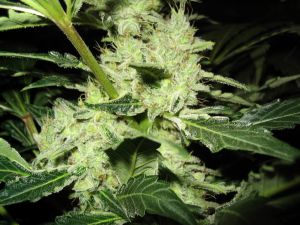 Marijuana legalization debates continue to ramp up on the floor of the state legislature, and the latest bill to be introduced is by far the most progressive to date. We previously posted an article about the introduction of Maryland Senate Bill 297, which dealt with the decriminalization of the popular drug. The most recent bill though takes Senator Zirkin’s proposal one step further, and calls for outright legalization of marijuana for recreational use. The new bill is nearly identical to the laws that were recently passed in Colorado and Washington. If passed into law, it would allow citizens over the age of 21 to possess one ounce or less of marijuana, and additionally to grow up to three plants in their homes. The current state law makes it illegal for anyone to possess even a residue amount of the plant, and violators face up to 90 days in jail for having 10 grams or less, and up to a year for possessing more than 10 grams.
 Back in June the Blog posted an
  We discussed in the last blog entry that state lawmakers were planning to introduce new legislation on medical and synthetic marijuana. These bills are still in the works, but the big news coming out of the state house is that a brand new marijuana decriminalization bill is scheduled for a debate today in Annapolis. Maryland Senate Bill 297, proposed by state senator Zirkin, would effectively reduce the punishment for simple possession of marijuana from a maximum 90 days in jail to a maximum $100 fine. In addition simple possession, which is defined as less than 10 grams of the drug, would no longer be part of the state criminal code. Much like a parking ticket, violators of the proposed law would only be subject to a civil fine and would not be at risk of jail time or a criminal conviction. The hearing was scheduled for debate this afternoon, and promises to feature spirited testimony from a variety of politicians, former law enforcement officers, and even economists.
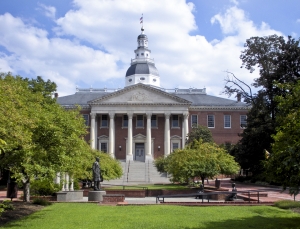 As we approach the midway point in this year’s legislative session in Annapolis, it should come as no surprise that marijuana is trending heavily on the floor. Representative Glenn of Baltimore planned to introduce the Maryland Medical Marijuana Act to the House Judiciary Committee. This is the same bill that lost steam during the legislative gauntlet last winter. The bill would allow the state’s Department of Health and Mental Hygiene to establish centers for marijuana distribution for patients with a medical necessity for the drug, provided they are under the continuous care of a doctor. Ms. Glenn is quoted as saying that “people are suffering everyday in the state of Maryland, and they are being subjected to going out on the streets for the relief we should be providing.” In addition to suffering unnecessary pain and anguish, medical marijuana users also face arrest and prosecution from State’s Attorneys and Judges who naively believe marijuana is a dangerous drug with no legitimate benefits. This type of archaic thinking is especially present in the more rural areas of the state, and in stricter jurisdictions such as Harford County and Worchester County.
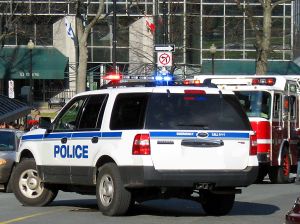 Police departments around the country are planning to ramp up their DUI detection and suppression efforts for the big game this weekend. Cops will deploy more road patrol officers than normal, and set up numerous checkpoints around the country this coming Sunday. These patrols and checkpoints will focus on popular nightlife areas and suburban neighborhoods where millions will be hosting or attending parties. Baltimore will likely see a large police presence in the downtown area, as thousands of Ravens fans will be out watching and celebrating the hometown team. The best piece of advice for any party goer who plans on drinking is to walk, take public transportation, or cab it. But, as most Marylanders are aware the state’s public transportation system and taxi cab network is hardly to most accessible, so driving is usually the only option. Get a designated driver, and try to find one that’ll be able to resist the temptation to drink when the Ravens are playing well, playing poorly, or doing both from one play to the next.
 Federal law enforcement recently announced that a major drug ring in suburban Maryland has been busted up, and numerous arrests have been made. In total, 18 people were arrested in the bust, and as many as 15 have already been charged with conspiracy to distribute more than two thousand pounds of marijuana and various other drugs. The federal grand jury indictment included information, which led federal officers to believe that the Anne Arundel County drug ring distributed cocaine, prescription pills, steroids, as well as large amounts of pot. As many as 250 federal agents participated in multiple raids that reportedly resulted in the seizure of 30 cars, 60 pounds of marijuana, upwards of 300 thousand dollars cash, and multiple guns. The seizures are not even close to complete as the U.S. Justice Department is seeking the court’s approval to confiscate over 10 million dollars in cash, multiple real estate properties, bank accounts, cars, and business assets.