 Criminal Defense Lawyer Blog


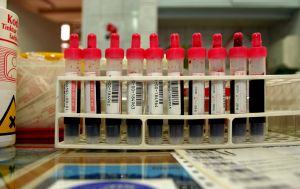 Compulsory or mandatory blood tests during the course of a DUI investigation have been a hotly debated legal topic over the last decade. The debate over whether cops should legally be able to force a DUI suspect to submit to a blood draw to measure blood alcohol level has been debated in Maryland, Delaware, and in almost every state in the county. Twenty years ago it would truly have been far fetched to predict that a state could one day grant its law enforcement officers the power to force a DUI suspect to submit to a blood test without a warrant, but now this idea is becoming a reality. Many Maryland beachgoers who happen to cross over into Delaware can find out the hard way about this harsh law.
In Delaware, a police officer may require a DUI suspect to submit to a blood alcohol test if he or she refuses to take a breath alcohol test. Typically, an EMT will be called to the scene of the DUI and instructed to take the suspects blood, or the blood draw can occur in the police station. Delaware law does not require that the DUI involve an accident or a serious injury to anyone involved in the DUI. Delaware law also does not require that the arresting officer or any officer obtain a warrant before requiring a blood alcohol test. There have been countless incidents of Maryland residents being arrested for DUI in Delaware, especially in the summer months when Marylanders flock to beach towns such as Dewey and Rehoboth. Many times these Maryland residents try to invoke their right to refuse a breath or blood alcohol test, only to be informed (and many times rudely informed) that this is only a right they can exercise in Maryland.
Continue reading →
 There are not many civil law topics worthy of a post on a criminal law blog, but the revival of the contributory negligence debate is one topic that deserves an exception. The Maryland civil justice system is one of four states plus Washington D.C. that uses the contributory negligence standard in all civil lawsuits. The contributory negligence standard bars recovery for a party that contributed in any manner to the accident or injury. If a plaintiff brings a civil lawsuit he or she may not recover a dime if the defense lawyers show that the plaintiff was negligent. For example, in a pedestrian accident case if the defense lawyer that represents the driver of the vehicle that hit the pedestrian shows that the pedestrian negligently ran across the street, then the pedestrian may not legally recover any damages. Even if the plaintiff’s lawyer has shown the driver who caused the accident was speeding and driving recklessly.
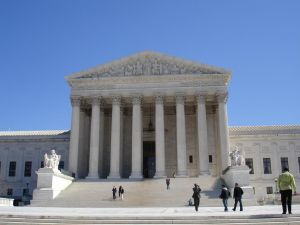 The United States Supreme Court will temporarily allow Maryland law enforcement agencies to resume their post arrest DNA testing policies according to an order signed by chief justice John Roberts. The DNA testing policies allow all Maryland law enforcement agencies to take DNA samples of suspects arrested for violent crimes such as robbery, assault, rape, and homicide. The law also allows police to take DNA from a suspect that is arrested for burglary. Although burglary is not a violent crime, it is a crime that is often only solved when forensic evidence such as DNA or latent fingerprints is recovered from the crime scene. Maryland police agencies are not allowed to take DNA samples upon arrest of suspects that are incarcerated for common non-violent crimes such as DUI, possession of marijuana, and drug distribution.
 A recent Maryland Court of Appeals decision has declared that it is an unconstitutional invasion of privacy for police officers to obtain DNA samples from arrested individuals absent a criminal conviction. It has previously been the standard practice of the Maryland State Police and other police departments around the state to obtain DNA samples from any suspect charged with burglary, and certain violent crimes such as assault, rape, homicide, and aggravated assault. Under the recent ruling, Maryland police departments must now wait until prosecuting lawyers secure a criminal conviction before they can legally obtain DNA samples from a defendant. The ruling by the Maryland Court of Appeals overturned the 2009 rape conviction of Alonzo Jay King Jr. when the court concluded that DNA samples that led to King’s rape conviction were the fruits of an illegal seizure pursuant to the Fourth Amendment of the U.S. Constitution. King’s DNA sample was obtained after he was arrested for an unrelated assault case. The high court ruling has had an immediate impact upon law enforcement, as the Maryland state police department, headquartered in Pikesville, Maryland, has already instructed its employees to suspend DNA sampling of arrested suspects.