 Criminal Defense Lawyer Blog


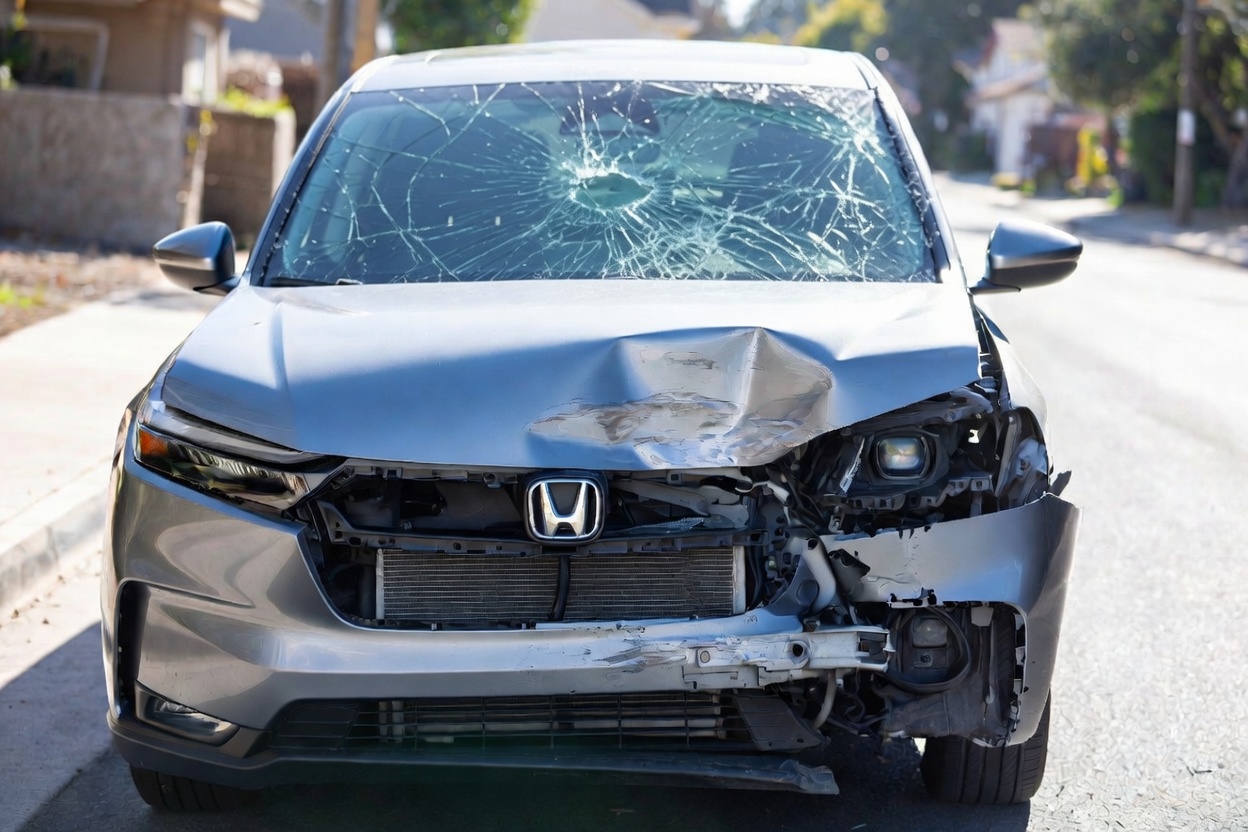 Last week in Montgomery County a 56-year-old man was struck and killed along the grassy median of Muddy Branch Road in Gaithersburg. The accident occurred shortly before 5 a.m. and by 11:30 that morning police had already located a 2011 SUV with front end damage in the crash scene’s vicinity. Montgomery County Police Collision Reconstruction Unit detectives responded and discovered the identity of the suspect who may have been responsible for the deadly crash. Detectives determined that the driver left the roadway and traveled into the grassy median for unknown reasons before striking the pedestrian. The driver was not at the scene when police arrived and did not attempt to contact police.
Later in the day of the accident, police were able to secure an arrest warrant for two felony charges including manslaughter by vehicle and leaving the scene of an accident involving death. The day after obtaining the warrant law enforcement officers at the Newark airport detained the defendant as he was attempting to board a flight out of the country. If not for the diligence of detectives, the defendant likely would have been able to avoid prosecution. At the same time, it is fair to question whether police had the requisite evidence to charge manslaughter by vehicle.
There are two types of manslaughter by vehicle, but both require proof of the defendant’s actions while behind the wheel. Manslaughter by vehicle under transportation Article 2-209 is a felony with a maximum penalty of 10 years in prison. It requires proof of gross negligence, which is behavior that demonstrates a reckless disregard for human life. Criminal negligence manslaughter under TA 2-210 requires proof of criminal negligence or creating a substantial and unjustifiable risk to human life. This offense is a misdemeanor with a 3-year maximum penalty. Both offenses would typically require a detailed crash reconstruction in order to obtain driving characteristics such as speed, impairment or aggressive driving. These investigations could take months before charges are filed, but in this case, police made a determination the same day of the accident. Regardless, police would not need a lengthy investigation to determine probable cause for failure to remain at the scene of the accident as the suspect was clearly not at the scene when law enforcment arrived.
There are six different types of charges for failing to remain at the scene of an accident in Maryland, and some carry the same potential penalties. If the accident only results in property damage the offense is will be one of two misdemeanor offenses with a 60-day maximum penalty upon a finding of guilt. Transportation Article 20-104 prohibits leaving the scene of an accident involving an attended vehicle, which means the other driver is present. TA 20-105 prohibits leaving the scene of an unattended vehicle. As of now this particular statute seems to only apply to parked vehicles, but there may have to be some modifications to this law to account for self-driving taxi cabs or other vehicles.
Accidents involving bodily injury carry more severe potential penalties, and Maryland law requires drivers involved in injury accidents to exchange information and also to render reasonable assistance to any person injured. Reasonable assistance includes arranging transportation to a medical facility if treatment is necessary, though duty is typically satisfied by calling 911 and remaining on scene until law enforcement arrives. A driver who fails to remain at the scene of an accident resulting in bodily injury is subject to a potential $3,000 fine and up to 1 year in jail under 20-102(a)(2)(i). There is no specific definition for bodily injury in the statute, so any pain requiring medical attention, cuts or bruises may apply. The potential penalties become increasing severe if serious bodily injury or death result from the accident.
Serious bodily injury is defined as an injury that causes substantial risk of death, causes permanent or serious disfigurement or serious or permanent loss of function to a body part or organ. A driver who leaves the scene of an accident resulting in serious bodily injury faces a felony conviction and up to 5 years in prison upon conviction under TA 20-102(c)(3)(i). The State must prove the defendant knew or should have known the accident might result in serious bodily injury under this statute. Failing to remain at the scene of an accident resulting in death is a felony with a 10-year maximum penalty under TA 20-102(c)(3)(ii) and requires proof of the same knowledge element. Without proof of knowledge, failing to remain at the scene of an accident resulting in death is a misdemeanor with a 5-year maximum penalty under TA 20-102(a)(2)(ii).
The Blog will continue to follow this case and may post a follow up article in the future when the case is resolved. If you have been charged with failure to remain at the scene of an accident in Maryland contact criminal defense attorney Benjamin Herbst anytime for a free consultation. Benjamin has secured numerous dismissals hit and run cases including leaving the scene of an accident with bodily injury. He was also earned jury trial acquittals in numerous traffic offenses ranging from DUI to felony manslaughter by vehicle. Contact Benjamin anytime for a free consultation at 410-207-2598.
Resources
Twenty-Six-Year-Old Arrested in New Jersey and Charged in Connection with Gaithersburg Fatal Collision, montgomerycountymd.gov.