 Criminal Defense Lawyer Blog


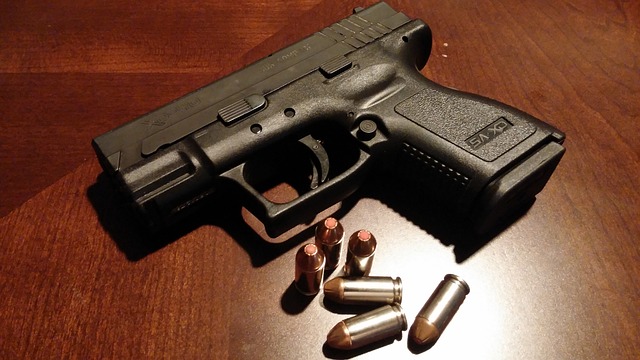 Maryland has some of the toughest gun laws in the country, and concealed carry licenses nearly impossible to obtain. A law abiding citizen basically has to prove that he or she has a legitimate need to carry a gun to even be considered for a carry license, and a large percentage of applications are denied. Many people, especially out of state residents, carry or transport firearms within the state illegally without even knowing it, and others know full well they are breaking the law but do it anyway. Either way, the strict laws on who can carry or transport a firearm and how they must legally do it make simple gun possession an extremely common offense in our state. But the strict laws don’t always mean harsh sentences for defendants. While some jurisdictions place a particularly high level of scrutiny on gun cases, most treat these cases like any other. And there are plenty of pro gun judges that decline handing down sentences that fall in line with the state legislature’s overzealous intent. However, under the current administration the federal government has continued to place an emphasis on vigorously prosecuting gun cases, especially cases involving illegal possession by a convicted felon.
Most people would associate federal criminal prosecutions with charges such as drug trafficking, fraud, money laundering, racketeering, and perhaps white-collar offenses, complex theft schemes, and crimes committed in multiple states. But the U.S. Attorney’s Office in Baltimore City has shown a willingness to get down and dirty in prosecuting simple firearms cases that involve one defendant and one gun. The feds are not too busy to make sure convicted felons possessing guns in Baltimore see the inside of a jail cell, and they know the only way to accomplish this may be to to make sure it’s a federal jail.
Federal prosecutors in Baltimore have been inclined to take cases from city prosecutors, often sending letters offering their services. And when they take a case out of state court it usually means bad news for the defendant. State law provides a fifteen-year maximum penalty for a felon or other disqualified person in possession of a firearm, and if the disqualifying offense was within 5 years then a minimum mandatory prison sentence may apply. Defendants in state court rarely receive anywhere near the maximum jail sentence, and rightly so. In most of these cases the defendant is only disqualified from possessing a firearm due to street level drug offenses that have no business being classified as felonies. But in federal court a defendant in an unlawful gun possession case is far more likely to serve serious prison time, and two recent cases support that contention. The U.S. Attorney’s Office recently announced that a 28-year old Baltimore man was sentenced to 15 years in prison for possessing a loaded .45 caliber handgun. The man never brandished the handgun or used it in the commission of another offense, but rather threw it in an alley as he allegedly ran from city police officers. And just one day before that case another man pled guilty to possession of a stolen gun in the same federal court downtown. This man was also prohibited from possessing a firearm due to previous felony convictions, and is due to be sentenced in the coming months. He too could face a lengthy prison sentence, although it won’t be the 15 years his younger counterpart received. The Blog will continue to follow the federal government’s prosecution of gun possession cases, as we may see a shift when the new administration takes over in January.




 The FBI and the Montgomery County Police recently announced the break up of a large-scale drug ring operating out of a residential area near Rockville. Monday during the early morning hours, as many as 100 state, local and federal law enforcement officers raided numerous townhomes in the Bel Pre development, as well as a business in Prince George’s County. The raids yielded a narcotics, multiple firearms, and over $70,000 in cash. All told 18 people were arrested, and now the defendants face felony drug charges in federal court. All but one of the defendants resides in Maryland, with the non-resident being from Pennsylvania. The defendants are charged with conspiracy to distribute heroin and cocaine, and could face other charges based on the evidence that was seized.
 The FBI recently concluded a two-year investigation of five Baltimore City public works employees, and now two face bribery charges in the United States District Court. The other three face theft and conspiracy charges, which are charged under a similar federal law. Cell phone wiretaps ultimately led to a raid in which federal authorities confiscated physical evidence to aid U.S. attorneys in proving their case against the five. One of the male defendants has been charged with conspiracy to solicit bribes concerning a program receiving federal funds and the only female defendant has been charged with the same, plus an additional count of bribery. The other three males are charged with conspiracy to steal from a program receiving federal funds and with theft.
 Almost 30 years ago the federal government took its war on drugs to new heights by proclaiming a zero tolerance policy. All drug crimes from trafficking to possession were to fall under this new initiative, and billions of dollars were spent on incarcerating offenders. Along with the fancy tag names and plentiful resources came new legislation that kept even non-violent, first time drug offenders in jail for years. Minimum mandatory prison sentences were established, and became a major source of power for the justice department, and subsequently for federal and state prosecutors. A minimum mandatory sentence requires a judge to hand down a specific prison sentence upon a finding of guilt, either by a plea or a guilty verdict at trial. Many of these sentences exclude a defendant from parole eligibility and even gain time for good behavior. While the stated goal of these sentences was to deter drug crimes, all they really did was cause severe overcrowding of prisons across the country. Not to mention creating an environment where non-violent drug offenders were serving more time than armed robbers.
 Just months ago United State’s Attorney’s Office praised the work of law enforcement in ending a complex Washington D.C. heroin and cocaine trafficking ring. The investigation and subsequent prosecution led to 14 felony convictions, with most of the defendants ending up with prison sentences. But as of this week, only one defendant remains jailed, and the other 13 have been released from prison. Last week a federal judge threw their cases out upon recommendation by the very prosecutors who worked diligently to secure these convictions less than a year ago. The exact reasons for this dramatic sequence of events is unknown, but we do know that at least one corrupt FBI agent participated in the investigation. This particular agent, a 33-year old named Matthew Lowry, was found slumped over in his car with evidence bags containing heroin and firearms seized from the investigation. While this incident alone could create enough suspicion of wrongdoing to warrant new trials in the related cases, it’s more likely that the prosecutors became aware of far greater corruption. Corruption that prompted immediate and unfettered action.