 Criminal Defense Lawyer Blog


 On Sunday night in Washington D.C., Nationals 19 year old baseball phenom Bryce Harper came up to bat in the bottom of the first inning. Veteran Phllies pitcher, Cole Hamels then proceeded to throw his first pitch directly at the lower back of Harper. Harper bent over in obvious pain for a few seconds, trotted off to first base, and then scored the first run of the game a few pitches later. After the game, the veteran pitcher admitted that he purposely threw the pitch in Harper’s direction, and fully intended to hit him. Hamels stated that throwing at Harper was his way of welcoming the rookie sensation to the major leagues. The commissioner of baseball however was not impressed with Hamels’ actions nor his honesty, and suspended the pitcher for 5 games.
The main issue up for debate throughout the country is whether Hamels’ actions hurt his team, and whether the suspension was deserved. But this being a Baltimore criminal lawyer blog, and not a sports blog, the relevant issue is whether the pitcher could be subject to criminal charges for his actions. The day after the incident, a Los Angeles prosecutor called ESPN radio’s Colin Cowherd and angrily boasted that if it were up to him, the pitcher would be facing felony aggravated assault with a deadly weapon charges. The overzealous L.A. prosecuting lawyer argued that the pitcher would have no defense to the criminal charges because he confessed, and summarily convicted the pitcher of a felony on the air. There are two reasons why this prosecutor is entirely off base, one being legal and the other being ethical.
Continue reading →
 The Maryland Legislature recently passed a bill that will lower the maximum penalty for possession of marijuana from 1 year in jail to 90 days in jail. Maximum fines for marijuana possession will also drop from $1000 to $500. The bill was signed into law by Governor O’Malley and will go into effect in October of 2012. The Maryland marijuana bill only applies to simple possession of less than 10 grams of the plant, a compromise between the two legislative chambers. The Maryland Senate wanted the new bill to apply to possession of any amount less than 14 grams of marijuana, or one half ounce, but the Maryland House wanted reduced punishments only for less than 7 grams, or one quarter ounce of marijuana. The Maryland law makers eventually agreed on the 10 gram limit, and the bill easily passed both chambers by a vote of 41-5 in the Senate, and 92-31 in the House.
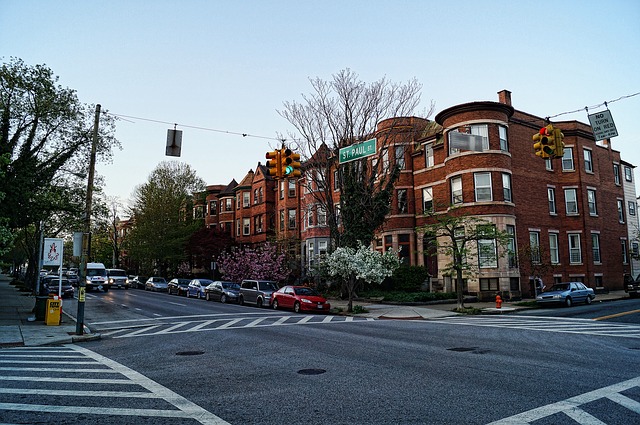 The Baltimore Police department has not been meeting the terms of a settlement regarding illegal arrests according to the ACLU. The settlement arose out of a 2006 lawsuit, which alleged a pattern of thousands of unlawful arrests for various non violent, low level crimes such as drug possession, trespassing, and loitering in Baltimore City. The civil lawsuit was filed by the ACLU on behalf of 14 people that were arrested in Baltimore without probable cause. The lawsuit stated that due to Baltimore City’s zero tolerance policy, Baltimore police officers began unlawfully arresting people on the street at an alarming rate.
  A recent Maryland Court of Appeals decision has declared that it is an unconstitutional invasion of privacy for police officers to obtain DNA samples from arrested individuals absent a criminal conviction. It has previously been the standard practice of the Maryland State Police and other police departments around the state to obtain DNA samples from any suspect charged with burglary, and certain violent crimes such as assault, rape, homicide, and aggravated assault. Under the recent ruling, Maryland police departments must now wait until prosecuting lawyers secure a criminal conviction before they can legally obtain DNA samples from a defendant. The ruling by the Maryland Court of Appeals overturned the 2009 rape conviction of Alonzo Jay King Jr. when the court concluded that DNA samples that led to King’s rape conviction were the fruits of an illegal seizure pursuant to the Fourth Amendment of the U.S. Constitution. King’s DNA sample was obtained after he was arrested for an unrelated assault case. The high court ruling has had an immediate impact upon law enforcement, as the Maryland state police department, headquartered in Pikesville, Maryland, has already instructed its employees to suspend DNA sampling of arrested suspects.
 Baltimore County Police have identified the main suspect in a string of recent Baltimore area burglaries. The burglaries have resulted in the theft of valuable items such as electronic office equipment, black checks, food, office supplies, postage stamps and money. The main suspect is apparently a 48 year old man from Baltimore that has also been implicated in other burglaries throughout Maryland. The recent Baltimore burglaries occurred on or about April 3 and included the breaking and entering of two medical offices. The first office was a podiatry center and the second burglarized office was a medical office used for testing and treatment of hearing disorders. Both offices used and stored valuable medical equipment.
 A Maryland man was recently arrested for selling marijuana and other drugs from his ice cream truck according to police in Charles County. The alleged Maryland drug dealer was arrested based on a tip from Crime Solvers. The tip apparently informed police that the 20 year old man had been illegally selling packets of marijuana while at the same time legally selling frozen treats in southern Maryland neighborhoods. Police responded to the tip and sent a investigative unit to attempt to observe the ice cream drug dealer in action. Police investigative units apparently were not able to catch the Maryland man actually performing a hand to hand transaction with a would be marijuana buyer, but they were able to secure an arrest with the help of a canine police unit.
 Maryland trespass laws have recently become a hot topic after two men were arrested for trespassing at Oriole Park at Camden Yards by Baltimore City police officers. The first incident occurred on opening day as the Orioles took on the Minnesota Twins in front of a rare sellout crowd. A 26 year old man from Severn, Maryland ran on to the field during the game dressed in a cape. Unfortunately for the Severn man the cape did not come complete with flying capabilities, and the trespasser was arrested shortly after entering the field of play. The aspiring superhero turned fourth outfielder managed to avoid criminal prosecution, albeit to none of his own credit. Lawyers from the Baltimore prosecutor’s office apparently failed to file charges due to an office miscommunication. The second incident occurred just 3 days later when a 19 year old Baltimore man dashed onto the field during the 12th inning of a frustrating loss to the Yankees. The 19 year old Baltimore man was not wearing a costume and did not receive the benefit of a prosecutorial miscommunication, as he now faces charges of trespass, disorderly conduct, and disturbing the peace.
  The Baltimore City Police Department is currently working out the details of a plan to begin video recording police interrogations for violent crimes. While the Baltimore City Police Department is the eigth largest in the county it is certainly not the most technologically advanced. Hundreds of police departments across the country currently record police interrogations for almost any crime including the Baltimore County Police Department. Some jurisdictions, including Washington D.C., go as far as requiring video recording for all police interrogations. In 2008, the Maryland General Assembly endorsed the use of video recorded interrogations, but did not decide to require them. As a result of the endorsement, the number of police agencies using video recording in Maryland has nearly doubled.
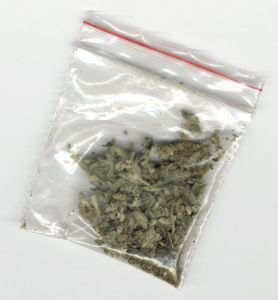 A Baltimore area marijuana dealer has been sentenced to over 20 years in prison after the jury found him guilty at trial. Defense lawyers were unable to overcome the strong evidence that federal prosecutors presented during two weeks of testimony in United States district court in Maryland. The convicted Baltimore drug dealer was arrested in 2010 and charged with distribution of marijuana and conspiracy to commit money laundering. Both the internal revenue service and the federal drug enforcement agency participated in the investigation, which ultimately let to a multi count indictment.
 Recently three school buses were involved in a car accident in Prince Georges County, Maryland where upwards of 25 students were injured. And just last week, a central Florida community was rocked by the news that 9 year old student was killed in a school bus accident, along with 15 other students being injured in the crash. These tragic accidents appear to be showing up in the news more frequently, which begs parents and lawmakers to question whether Maryland school buses are actually safe and what the legislature could do to make them safer.