 Criminal Defense Lawyer Blog


 In Maryland, and throughout the county, drunk driving is one of the most publicized crimes in the entire justice system. Not only is drunk driving the most common crime in the country according to the bureau of justice statistics arrest data, but drunk driving also affects the widest range of people. Drink driving defendants come from all ages and backgrounds, with some being multiple convicted criminals and others being first time offenders. Drunk driving also affects a wide range of victims, including children. Each year, powerful and well funded lobby groups pour millions of dollars into establishing comprehensive drunk driving educational programs in our schools, and educational commercials on television and radio. These lobby groups also influence state and federal lawmakers to pursue and maintain strict drunk driving laws, and are many times successful in influencing these lawmakers. Recently some of this attention has Maryland drunk driving laws in the news as well.
Maryland drunk driving laws have recently been called into question for being too lenient relative to other states in the country. A closer look at the DUI laws in other states reveals that this criticism does not appear to be a reasonable one. Maryland currently has the 26th strictest drunk driving laws in the country according to Mothers Against Drunk Driving (MADD). While this statistic puts Maryland in the middle of the pack in terms of strictness, these numbers can be misleading. Although Maryland may not have as strict a drunk driving policy as Utah, which enforces a 2 day minimum mandatory jail sentence for a first DUI, by no means is Maryland a lenient state when it comes to drunk driving.
Continue reading →
 The recent movement to legalize medical marijuana in Maryland has been gaining steam each year, and the state legislature is slowly moving toward joining 17 other states and Washington D.C. as medical marijuana states. Although there is no medical marijuana bill currently being debated, the Maryland legislature is trending in the medical marijuana direction, as evidenced by recent bills that have modified state marijuana laws. Just last year, the Maryland governor signed off on a law that effectively decriminalizes marijuana use provided that the accused can produce a valid note from a licensed medical doctor that indicates a medical necessity for the drug. In addition, the Maryland legislature passed a law that will lower the maximum penalty for simple possession of marijuana from 1 year in jail to 90 days in jail. On the other hand, medical marijuana is still not legal in Maryland, and regardless of where the state legislature is trending, thousands of Marylanders are still being arrested for possession of the drug each year.
 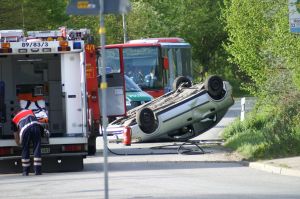 Road rage and aggressive driving incidents in Maryland have become common in the last decade, and law makers have been forced to address the issue, but rarely does a road range incident make news headlines. Unfortunately a recent dangerous road rage incident appeared in the news just last weekend. The Maryland state police has reported that a road rage incident on interstate 295 in Baltimore has resulted in a pair of arrests and multiple serious injuries. Police arrested one Maryland man who was the driver of the main vehicle involved in the road rage incident for DUI, assault, and destruction of property. The passenger, another Maryland man, was also arrested and charged with assault and malicious destruction of property.
 Washington D.C. currently has tougher marijuana laws than Maryland and Virginia but that may change if D.C. mayor Vincent Gray can sway district officials in the coming months. The mayor has publically stated that the D.C. government will focus on implementing their medical marijuana program, but should not ignore the opportunity to make policy changes for recreational marijuana users. Washington’s medical marijuana law was approved in 2010 and allows sanctioned marijuana dispensaries to grow and distribute to drug to patients with a medical marijuana prescription. The city’s medical marijuana program has struggled to gain support from the community as a whole, and changing this perception appears to be the mayor’s main focus. But decriminalization of marijuana is still on the government’s radar, and the policy changes that the mayor is speaking of would not necessarily mean legalizing recreational use of marijuana. Rather the first step would be to decriminalize the drug, making simple possession of marijuana punishable only by a civil fine, and not by a term of incarceration as the law currently provides.
 Retail theft is one of fastest growing crimes in the United States, but Maryland and especially Baltimore appear to be suffering the greatest increases in theft crimes. The FBI has estimated that retail theft may cost the U.S. about $30 billion per year, and these losses are often passed on to the consumer in the form of higher priced goods. While many retail theft crimes are carried out by novice shoplifters or misguided juvenile thrill seekers, the major impacts of retail theft are the result of organized and sophisticated theft operations. When we hear the phrase organized crime, our minds immediately take us to classic mobster movies such as the Godfather, Goodfellas, and Casino, but not all organized crime involves high stakes gambling or drug operations. In fact, retail theft has become one of the most common sources of income for organized crime operations, and now Maryland appears to be a new up and comer in the organized retail theft arena.
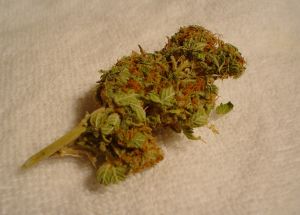 A Maryland man was recently the victim of an armed robbery in his home in College Park. Amongst the property the man reported stolen to the police was about $600 of rent money and the man’s stash of marijuana. Yes, you heard that correctly. The College Park man reported to police that the robbery suspects were armed with handguns and had demanded that the man turn over his money and his drugs. The robbery suspects reportedly assured the man that he would not be in any danger if he complied with the request to give up his money and his marijuana. A nice gesture by the armed home invasion robbers, but a gesture that will certainly not help the suspects in court if they are ever arrested. The Maryland man complied and handed over his rent money and an unknown quantity of marijuana, and then the robbery suspects left the house. Police also reported that the armed robbery suspects took laptops and cell phones from the house, but the Maryland man was not aware of this missing property at the time he initially reported the crime to police.
 We have all heard of the term drunk driving, as DUI is one of the most common crimes in Maryland. In fact, DUI is one of the most common crimes in the entire country, as police make nearly 1.5 million DUI arrests per year in America. But what about drugged driving? Driving while under the influence of a drug such as marijuana is technically illegal in Maryland, but under Maryland law there are no definitive drug testing procedures for DUI. Under Maryland law you can be convicted of DWI with a blood alcohol concentration of .07 to .08, and for DUI with a blood alcohol concentration over .08. While these standardized numbers are somewhat arbitrary because everyone feels the effects of alcohol in different ways, the standardized numbers do provide at least the image of consistency and uniformity in DUI prosecutions. On the other hand, Maryland law does not indicate specific levels of drug concentration in the blood that would define driving while under the influence of drugs. If a police officer suspects someone is driving under the influence of drugs and not alcohol the officer can request the suspect to submit to a drug test. The question has been and will continue to be- what exactly do the results of a drug test tell us with respect to DWI?
 A routine traffic stop over the weekend led Maryland police to nearly 100 grams of heroin as well as a forged oxycodone prescription. The traffic stop took place in Annapolis and resulted in the arrest of 3 Maryland residents for various criminal offenses including drug possession, theft, and drug possession with intent to distribute. Although the traffic stop was routine, the events that followed the stop and led police to the drugs were hardly routine, and could raise multiple legal issues. Annapolis police stopped the bright green Lincoln at around 5 p.m. for an undisclosed traffic violation. The undisclosed traffic violation could be for anything from a broken taillight to failure to stop at a stop sign but chances are that the bright green car caught the eye of the Annapolis cops. As many criminal lawyers know, when a car raises red flags police typically will not wait for a traffic infraction to occur before making a traffic stop. Rather they will make the stop and then figure out a believable traffic infraction later.
 The city of Washington D.C. has agreed to settle four civil lawsuits over false DUI convictions. The civil claims for damages were filed back in 2010 by 4 men whose DUI convictions were tainted by inaccurate breath alcohol testing machines. The city has agreed to pay a total of $20,000 plus attorney’s fees to the 4 plaintiffs. Two of the plaintiffs will receive $5000, and the other two will receive $8,000 and $2,000 respectively. The lawsuit alleged that city officials and police were aware that the breath alcohol testing machines were flawed, but continued to use them in criminal DUI prosecutions. As early as 2008 an independent expert informed the city that their breath alcohol machines were not providing accurate results for a variety of reasons. The machines used in D.C. are similar to the Intoxilyzer machines used in Maryland, and require regular maintenance and calibration. D.C. officials failed to do either, but that does not even tell half the story of the city’s dishonest and fraudulent behavior.