 Criminal Defense Lawyer Blog


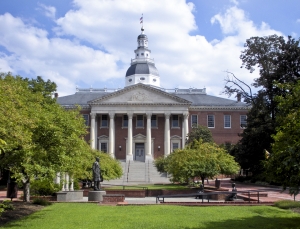 This year’s legislative session is well under way in Annapolis, and all signs point to the conclusion that legalized pot is still a pipedream in Maryland. The state made national and even global headlines in November for officially sanctioning same sex marriage and has been called one of the most liberal in the country. But when it comes to drug enforcement, and marijuana in particular, Maryland is a far cry from liberal. In fact, our great state is stricter than most when it comes to drug crimes and possible sentences. Possession of over ten grams of the drug still carries a one year jail sentence, and cops around the state are arresting large numbers of simple possession defendants. There are multiple reasons for the grim outlook on possible recreational and medical marijuana legalization, but the biggest reason comes from the top of the political food chain. Governor O’Malley has repeatedly threatened to veto any legalization bill that crosses his desk, and has shown no signs of backing down from this stance.
Other concerns stem from concern amongst legislators that the federal government would step in and begin prosecuting any legal state marijuana operations. The drug is still years away from federal legalization and the Justice Department has shown no signs of change on the issue either. But according to supporters for legalization, concerns over the federal government meddling in the state’s medical marijuana policy is unfounded and lacks precedent. There are very few cases around the country where the federal government has made an effort to corral medical use operations, and there is no evidence that the federal government is going to interfere with Colorado and Washington’s recreational use laws. Lately, it seems the federal government excuse is becoming more popular with politicians across the country that are reluctant to take a stance on legalization.
Continue reading →
 Maryland lawmakers are set to begin the 2013 legislative session next week in Annapolis, and gun control is one topic on the minds of many representatives. State legislatures from all over the country will undoubtedly take a deep look into their respective gun laws following the Newtown, Connecticut tragedy, and Maryland is no exception. At least one representative, a democrat from Baltimore County, has already publically proposed a bill that would require active duty police officers to be deployed full time in all state public schools. There are currently school resources officers in many middle and high schools and a few elementary schools, but deploying these officers in public schools is not mandatory. School resource officers are sworn policemen and women that have arrest powers, and carry standard issue police firearms. The bill was submitted as emergency legislation, which means that if it passes it could go into effect as soon as February. It is obviously too early to tell if the bill will receive any opposition, but it seems as if the financial burden on local police jurisdictions would be the only obstacle to the bill’s passage.
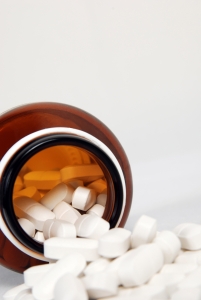 The war on prescription drug abuse has been effective in decreasing the availability of commonly abused pills such as oxycodone and other narcotics. But as an unintended consequence, heroin use in Maryland has actually been on the rise. More people are using heroin, and state officials are reporting a significant jump in the number of deaths attributed to heroin overdoses in 2012. In fact, in the first half of 2012 heroin related overdoses increased 41 percent, with 205 deaths reported from January to July of this year compared to 145 in 2011 over the same time frame. There could be a wide variety of reasons for the jump in overdoses, which according to state officials signals a definite jump in use of the drug, but the leading factor is likely a recent crackdown on pill mills.
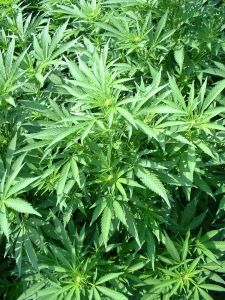 The Maryland Legislature is scheduled to begin its 2013 legislative session next month, and marijuana is one issue that is sure to be hotly debated. Medical marijuana supporters and personal use advocates alike hope that this year’s session makes more progress in the fight for decriminalization. Toward the end of last year’s legislative session, the head of the state’s department of health went on record saying that he would not support decriminalization as long as federal law continued to define pot as an illegal controlled substance. The department head cited concerns that his state employees could be subject to federal prosecution under the controlled substances act and there would be nothing the state could do to protect them. The head of any state agency has a duty to protect his or her employees, but the broader issue is also that state lawmakers want to protect their constituents as well. It would certainly not look good for Annapolis if Maryland citizens were being prosecuted federally for following a law that their own delegates supported and eventually passed. But supporters of marijuana decriminalization have hope that this year will be different based on two influential votes on this past Election Day.
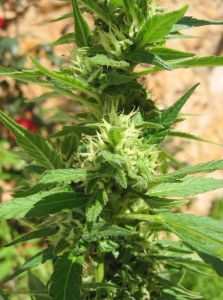 A variety of new Maryland laws are set to go into effect on Monday, October 1st. Many of these new Maryland laws are part to the criminal justice system, most notably the Maryland marijuana possession law. After years of lobbying by marijuana legalization groups, the Maryland state legislature finally voted to change the state’s harsh marijuana possession laws. Starting on Monday, the maximum penalty for simple possession of marijuana will be lowered from 1 year in jail to 90 days in jail, and the maximum fine will be lowered from $1,000 to $500. Simple possession of marijuana is possession of less than 10 grams of the controlled substance. Pressure from pro marijuana lobbyist groups was not the only reason that the legislature and governor agreed with the new marijuana penalties. The legislature was also swayed by proponents of a more streamlined judicial system.
  Enforcing Maryland marijuana laws is still a top priority for law enforcement agencies throughout the state, but public sentiment about the drug may be changing the way police look at marijuana cases. Marijuana arrests still account for the majority of all drug arrests throughout Maryland, and in most jurisdictions the ratio of marijuana arrests to other drug arrests is not even close. For example, in Montgomery County 67 percent of all drug possession arrests were for marijuana possession in 2011, and a staggering 74 percent of all drug possession arrests were for marijuana in 2010. These numbers would be even higher if all drug cases processed by Montgomery County Police were included, because a large number of marijuana possession defendants are not arrested, but rather are issued citations for the crime. In contrast, suspects caught by police with other drugs such as cocaine or heroin are almost always arrested at the crime scene. So far in 2012 the percentage of marijuana arrests to all drug arrests has fallen slightly to 63 percent. The question being asked now is whether this percentage will continue to drop as Maryland citizens and Maryland lawmakers become more tolerant of marijuana use.
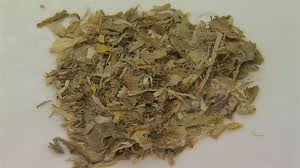 In the past few years the Maryland legislature has weakened its stance on the prosecution of marijuana possession cases. This trend began with the passing of laws that allow defendants charged with possession of marijuana to assert the legal defense of medical necessity. The Maryland legislature also went on to pass a law that will decrease the maximum jail sentence that a defendant charged with a first offense of possession of marijuana can receive. Come October, a first offense for marijuana possession will carry a 60 day maximum jail sentence rather than the scarcely used 1 year maximum jail sentence. Surprisingly though, the Maryland legislature has remained silent on the issue of synthetic marijuana.
  In Maryland, and throughout the county, drunk driving is one of the most publicized crimes in the entire justice system. Not only is drunk driving the most common crime in the country according to the bureau of justice statistics arrest data, but drunk driving also affects the widest range of people. Drink driving defendants come from all ages and backgrounds, with some being multiple convicted criminals and others being first time offenders. Drunk driving also affects a wide range of victims, including children. Each year, powerful and well funded lobby groups pour millions of dollars into establishing comprehensive drunk driving educational programs in our schools, and educational commercials on television and radio. These lobby groups also influence state and federal lawmakers to pursue and maintain strict drunk driving laws, and are many times successful in influencing these lawmakers. Recently some of this attention has Maryland drunk driving laws in the news as well.
  The recent movement to legalize medical marijuana in Maryland has been gaining steam each year, and the state legislature is slowly moving toward joining 17 other states and Washington D.C. as medical marijuana states. Although there is no medical marijuana bill currently being debated, the Maryland legislature is trending in the medical marijuana direction, as evidenced by recent bills that have modified state marijuana laws. Just last year, the Maryland governor signed off on a law that effectively decriminalizes marijuana use provided that the accused can produce a valid note from a licensed medical doctor that indicates a medical necessity for the drug. In addition, the Maryland legislature passed a law that will lower the maximum penalty for simple possession of marijuana from 1 year in jail to 90 days in jail. On the other hand, medical marijuana is still not legal in Maryland, and regardless of where the state legislature is trending, thousands of Marylanders are still being arrested for possession of the drug each year.
  Washington D.C. currently has tougher marijuana laws than Maryland and Virginia but that may change if D.C. mayor Vincent Gray can sway district officials in the coming months. The mayor has publically stated that the D.C. government will focus on implementing their medical marijuana program, but should not ignore the opportunity to make policy changes for recreational marijuana users. Washington’s medical marijuana law was approved in 2010 and allows sanctioned marijuana dispensaries to grow and distribute to drug to patients with a medical marijuana prescription. The city’s medical marijuana program has struggled to gain support from the community as a whole, and changing this perception appears to be the mayor’s main focus. But decriminalization of marijuana is still on the government’s radar, and the policy changes that the mayor is speaking of would not necessarily mean legalizing recreational use of marijuana. Rather the first step would be to decriminalize the drug, making simple possession of marijuana punishable only by a civil fine, and not by a term of incarceration as the law currently provides.