 Criminal Defense Lawyer Blog


 There are not many civil law topics worthy of a post on a criminal law blog, but the revival of the contributory negligence debate is one topic that deserves an exception. The Maryland civil justice system is one of four states plus Washington D.C. that uses the contributory negligence standard in all civil lawsuits. The contributory negligence standard bars recovery for a party that contributed in any manner to the accident or injury. If a plaintiff brings a civil lawsuit he or she may not recover a dime if the defense lawyers show that the plaintiff was negligent. For example, in a pedestrian accident case if the defense lawyer that represents the driver of the vehicle that hit the pedestrian shows that the pedestrian negligently ran across the street, then the pedestrian may not legally recover any damages. Even if the plaintiff’s lawyer has shown the driver who caused the accident was speeding and driving recklessly.
Most states use the comparative negligence standard, which allows the plaintiff to recover damages even if he or she was negligent in causing the accident or injury. If the jury finds that the plaintiff deserves a verdict, the jury will be instructed to subtract their award of damages based on the percentage of the plaintiff’s negligence or fault. If the plaintiff proves $100,000 damages but was 10 percent negligent in causing the accident, then the jury will be instructed to award a verdict of $90,000. The contributory negligence standard does occasionally cross over to the criminal justice system, when there is evidence that the plaintiff of an injury case was under the influence of drugs such as marijuana or prescription medication, or if the plaintiff was driving and drinking alcohol, but not to the level that would rise to DUI. The comparative negligence standard in civil cases is highly favorable to the plaintiff, and Maryland trial lawyers have been fighting to change the standard for years. Maryland trial lawyers argue that the contributory negligence standard is too harsh, and unjustly bars recovery. The trial lawyers also argue that everyday citizens are denied access to the civil justice system, because trial lawyers cannot afford to take on cases that may be thrown out due to the slightest bit of contributory negligence. On the other hand, the insurance companies argue that the contributory negligence system keeps frivolous lawsuits out of the court system, and keeps Maryland insurance premiums in check.
Continue reading →
 Each year during the summer, the Maryland State Police releases its uniform crime report for the state of Maryland. The crime report uses data collected from every police jurisdiction in all 24 Maryland counties, but only factors in reported crimes in the report. The Maryland State Police defines reported crimes as actual incidents reported to police by victims, witnesses, and other sources used by law enforcement. Complaints of crime that law enforcement deem unfounded are not included in the reported crimes data. The annual uniform crime report is by no means a complete study of all crime in Maryland. In fact, the report only includes eight umbrella crimes in two separate categories, which are violent crimes and property crimes. A specific crime that does not fit into one of the umbrella crimes is not included in the report. Thus many of the most common crimes in Maryland such as DUI, drug possession, and drug sale are not included. In sum, the annual report is not a study of how many people are breaking the law in Maryland each year. Rather, the report analyzes the crimes that that have the greatest impact on citizens, and gauges how safe we really are throughout Maryland.
 The previous blog post discussed the effectiveness of Maryland DUI checkpoints, and specifically focused on Howard County, Maryland. Howard County has long since been the most aggressive Maryland County when it comes to instituting and publicizing DUI checkpoints. This post will go into greater detail about yet another Maryland county choosing to make a news splash by instituting a DUI checkpoint during a holiday weekend. The cost and inconvenience of the latest Howard County DUI checkpoint arguably outweighed the actual benefit, but you would never hear anyone from Howard County police admit to that. On the other hand, police from this weekend’s Maryland DUI checkpoint in Worcester County may have spilled the beans on what they really think about the value of DUI checkpoints.
 Howard County police recently set up a DUI checkpoint on Maryland Route 1. The checkpoint, which was located in North Laurel, began in the late evening on Friday night and extended into the early morning hours of Saturday. Police chose the location after examining DUI arrest data and traffic accident data where alcohol was involved. Howard County police did not release the exact hours of the DUI checkpoint, or how many officers were involved in the operation, but typical DUI checkpoints last roughly 6 hours and involve at least 10 police officers. Howard County did release the statistics of how many cars were stopped and how many arrests were made. In total, the DUI checkpoint resulted in 690 vehicles being stopped, and a total of 5 people being arrested. Of the 5 arrests, two were for driving on a suspended license, and 3 arrests were for DUI. One of the suspects arrested for DUI was 18 years old, and was also charged with a separate alcohol charge of underage drinking.
  The ongoing battle marijuana to legalize marijuana in America and in Maryland took another hit recently as Federal prosecutors have increased efforts to crackdown on medical marijuana dispensaries. This latest crackdown effort came at the hands of Federal lawyers and court papers rather than with the search warrants and guns of the DEA and FBI. No arrests were made in any of the latest anti marijuana push, but a strong message has been sent across the country that the Feds are not ready to reverse their position on marijuana legalization.
  Talk about a rough night. A southern Maryland man was recently arrested for DUI and multiple other traffic offenses. Police came in contact with the man after he was pulled over for unsafe lane changing. Upon contacting the man, the Maryland State Trooper noticed the odor of an alcoholic beverage coming from the driver’s breath. After conducting a DUI investigation, the trooper arrested the man and charged him with DUI, negligent driving, and unsafe lane change. The driver was also given a breathalyzer test at the police station, where his blood alcohol content registered .15, nearly twice the legal limit. A DUI arrest and multiple traffic tickets would certainly have ruined anyone’s evening, but the southern Maryland man’s night was far from over at this point.
 Annapolis police have arrested a 19 year old Maryland man in one of the largest drug busts in Anne Arundel County this year. Police received tips from community sources, as well as their own investigations in order to secure a search warrant that ultimately led to the seizure of nearly $30,000 worth of heroin, stacks of cash, and marijuana. Police also seized two handguns from the Maryland man’s house. Closer examination of the guns back at the Annapolis police department revealed that the firearms, a 9mm Beretta and a Smith and Wesson, were in fact stolen. Police did not reveal how much marijuana was seized from the Maryland residence, but closer inspection of the heroin revealed 140 grams of high grade heroin packaged for sale. Annapolis police are still investigating possible sources of the heroin. At the current time, police have not arrested a supplier, but more arrests stemming from this bust could be imminent. The Maryland man was arrested on 5 separate CDS drug counts including narcotics possession, possession of drugs with intent to distribute, and possession of drug paraphernalia. Bail was set at $40,000, which was posted soon after the arrest.
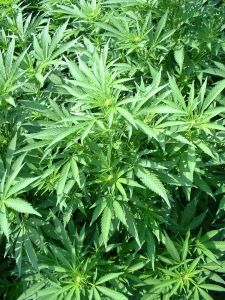 A Maryland man was arrested for multiple drug charges after police used a search warrant to raid his Ann Arundel County home. Ann Arundel police executed the search warrant and discovered approximately 46 marijuana plants, which ranged from 5 to 6 feet tall. Police did not release the exact details of what led them to the 53 year old man’s home, but police did say that residents of the neighborhood had voiced to concerns to cops about possible drug activity going on in the house. According to police, the Maryland man was arrested for 9 drug charges including manufacturing marijuana, possession of marijuana with intent to distribute, and possession of marijuana. Manufacturing marijuana and possession of marijuana with intent to distribute are both felonies, while possession of marijuana is a misdemeanor. Police did not indicate whether they had any concrete evidence that the Maryland homeowner was actually dealing drugs, or if the marijuana grow operation was simply for personal use. According to police, the marijuana would eventually have a street value of over 50 thousand dollars once the marijuana was harvested.
 Enforcing Maryland marijuana laws is still a top priority for law enforcement agencies throughout the state, but public sentiment about the drug may be changing the way police look at marijuana cases. Marijuana arrests still account for the majority of all drug arrests throughout Maryland, and in most jurisdictions the ratio of marijuana arrests to other drug arrests is not even close. For example, in Montgomery County 67 percent of all drug possession arrests were for marijuana possession in 2011, and a staggering 74 percent of all drug possession arrests were for marijuana in 2010. These numbers would be even higher if all drug cases processed by Montgomery County Police were included, because a large number of marijuana possession defendants are not arrested, but rather are issued citations for the crime. In contrast, suspects caught by police with other drugs such as cocaine or heroin are almost always arrested at the crime scene. So far in 2012 the percentage of marijuana arrests to all drug arrests has fallen slightly to 63 percent. The question being asked now is whether this percentage will continue to drop as Maryland citizens and Maryland lawmakers become more tolerant of marijuana use.
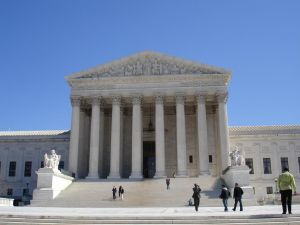 The United States Supreme Court will temporarily allow Maryland law enforcement agencies to resume their post arrest DNA testing policies according to an order signed by chief justice John Roberts. The DNA testing policies allow all Maryland law enforcement agencies to take DNA samples of suspects arrested for violent crimes such as robbery, assault, rape, and homicide. The law also allows police to take DNA from a suspect that is arrested for burglary. Although burglary is not a violent crime, it is a crime that is often only solved when forensic evidence such as DNA or latent fingerprints is recovered from the crime scene. Maryland police agencies are not allowed to take DNA samples upon arrest of suspects that are incarcerated for common non-violent crimes such as DUI, possession of marijuana, and drug distribution.