 Criminal Defense Lawyer Blog
 The synthetic marijuana controversy is back in the news again in Maryland. Clashes between vendors and members of the community where the fake drug is being sold continue to butt heads, and Frederick is at the center of this latest dispute. A cigar store that also sells beer and wine on Market Street in downtown Frederick has seen sales of synthetic marijuana boom in the last few months. Commonly known as spice, which was the one of the product’s original names, synthetic marijuana is actually a blend of natural herbs that is sprayed with a chemical compound. The chemical is not one specific compound, but rather one of many that is designed to mimic the effects of THC. Many of these chemicals have been made illegal by the federal government, including the original spice and K2 compounds, but manufacturers have created new chemicals to skirt the federal regulations. The synthetic drug now lines the shelves of various tobacco shops and liquor stores in Maryland, and the product is flying off the shelves. While storeowners and smokers are thrilled about the product’s availability, members of the community are voicing their displeasure with spice sales.
Continue reading →
Published on:
Synthetic Marijuana Causes Controversy in Frederick


 Federal probation and parole in Maryland got a whole lot easier for some defendants from 2009 to 2010. Well, at least it was for the dozens of defendants who had been convicted of federal crimes, or recently released from federal custody and completed their mandatory drug testing requirements at the Maryland treatment centers of Clean and Sober or Drug and Alcohol Recovery. And it were the drug counselors and drug testers that were allegedly on the take of this large scale pay for pass scheme. According to indictment proceedings that were just released to the public, two former federal contractors from Rockville, Maryland were involved in a long standing bribery operation where drug testing results were falsified in exchange for monetary compensation. Both former drug testers had been under investigation for federal criminal charges including bribery, making false statements, and witness tampering, and both face considerable prison time. According to court documents, one drug tester pleaded guilty to bribery, and is awaiting sentencing while the other was recently indicted. The drug tester who did not plead guilty was arrested soon after the results of the grand jury investigation were released.
 The Anne Arundel County Police Department has released its final statistics about a recent DUI checkpoint. The results are consistent with another Maryland DUI checkpoint on the Eastern Shore that was the subject of a
 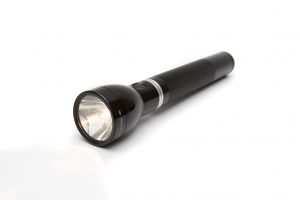 All Maryland police officers receive some sort of training in constitutional laws relating to search, seizure, and arrest. Constitutional law is by no stretch of the imagination the focus of any police academy’s training program. There is just not enough time and too little resources to put every potential police officer through a rigorous classroom curriculum on the search and seizure laws. Even if this training were available, there are no guarantees that each trainee would retain the information, and or use it in while working out in the field. This is not to blame police officers, as it is much easier to sit down and write an essay on constitutional law than it is to follow decades of case law and statutory restrictions during the heat of an arrest. Yes, it is true that some police officers intentionally conduct illegal searches and seizures, and make bad arrests, but good intentioned police officers face the daily challenge of making split decisions to protect life and property, and sometimes there is just no room for the constitution. Therefore police officers will make unlawful arrests, and execute unlawful searches and seizures, and this should be the first issue that any criminal defense lawyer should investigate in any criminal case. But this blog entry is dedicated to those people who wish to avoid ever needing a criminal defense lawyer to address an unlawful arrest. Knowing the basic search and seizure laws is not a foolproof way of avoiding an arrest. Each year thousands of drug prosecutions for substances such as marijuana and cocaine are carried out using evidence that was illegally seized. In addition, hundreds of DUI investigations are initiated after police make an illegal traffic stop. But knowing the law just may help you get out of a sticky situation, and it certainly cannot hurt.
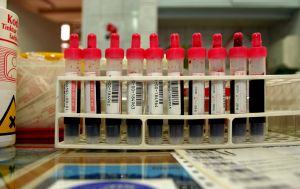 Compulsory or mandatory blood tests during the course of a DUI investigation have been a hotly debated legal topic over the last decade. The debate over whether cops should legally be able to force a DUI suspect to submit to a blood draw to measure blood alcohol level has been debated in Maryland, Delaware, and in almost every state in the county. Twenty years ago it would truly have been far fetched to predict that a state could one day grant its law enforcement officers the power to force a DUI suspect to submit to a blood test without a warrant, but now this idea is becoming a reality. Many Maryland beachgoers who happen to cross over into Delaware can find out the hard way about this harsh law.
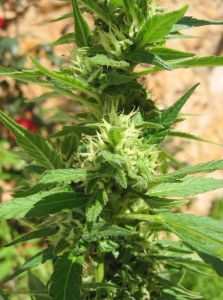 A variety of new Maryland laws are set to go into effect on Monday, October 1st. Many of these new Maryland laws are part to the criminal justice system, most notably the Maryland marijuana possession law. After years of lobbying by marijuana legalization groups, the Maryland state legislature finally voted to change the state’s harsh marijuana possession laws. Starting on Monday, the maximum penalty for simple possession of marijuana will be lowered from 1 year in jail to 90 days in jail, and the maximum fine will be lowered from $1,000 to $500. Simple possession of marijuana is possession of less than 10 grams of the controlled substance. Pressure from pro marijuana lobbyist groups was not the only reason that the legislature and governor agreed with the new marijuana penalties. The legislature was also swayed by proponents of a more streamlined judicial system.
  Snickerdoodle cookies might not have the value of the crown jewels in London, or the gold in Fort Knox, but it is certainly easier to attempt a cookie theft. Or at least that is what two Maryland teenagers had thought before attempting the not so glamorous heist. Baltimore County police recently arrested two sweet toothed teenagers for theft after security guards at the Towson town center observed the teens jumping over the counter at a cookie store. Three Maryland teenagers were apparently involved in the theft, but police were only able to arrest two 16 year old suspects. Police did not reveal exactly how many cookies were stolen by the two teenagers, but the amount appears to be significantly less that the amount of cookies that were stolen at the same store just 48 hours earlier.
 There are not many civil law topics worthy of a post on a criminal law blog, but the revival of the contributory negligence debate is one topic that deserves an exception. The Maryland civil justice system is one of four states plus Washington D.C. that uses the contributory negligence standard in all civil lawsuits. The contributory negligence standard bars recovery for a party that contributed in any manner to the accident or injury. If a plaintiff brings a civil lawsuit he or she may not recover a dime if the defense lawyers show that the plaintiff was negligent. For example, in a pedestrian accident case if the defense lawyer that represents the driver of the vehicle that hit the pedestrian shows that the pedestrian negligently ran across the street, then the pedestrian may not legally recover any damages. Even if the plaintiff’s lawyer has shown the driver who caused the accident was speeding and driving recklessly.
 Each year during the summer, the Maryland State Police releases its uniform crime report for the state of Maryland. The crime report uses data collected from every police jurisdiction in all 24 Maryland counties, but only factors in reported crimes in the report. The Maryland State Police defines reported crimes as actual incidents reported to police by victims, witnesses, and other sources used by law enforcement. Complaints of crime that law enforcement deem unfounded are not included in the reported crimes data. The annual uniform crime report is by no means a complete study of all crime in Maryland. In fact, the report only includes eight umbrella crimes in two separate categories, which are violent crimes and property crimes. A specific crime that does not fit into one of the umbrella crimes is not included in the report. Thus many of the most common crimes in Maryland such as DUI, drug possession, and drug sale are not included. In sum, the annual report is not a study of how many people are breaking the law in Maryland each year. Rather, the report analyzes the crimes that that have the greatest impact on citizens, and gauges how safe we really are throughout Maryland.
 The previous blog post discussed the effectiveness of Maryland DUI checkpoints, and specifically focused on Howard County, Maryland. Howard County has long since been the most aggressive Maryland County when it comes to instituting and publicizing DUI checkpoints. This post will go into greater detail about yet another Maryland county choosing to make a news splash by instituting a DUI checkpoint during a holiday weekend. The cost and inconvenience of the latest Howard County DUI checkpoint arguably outweighed the actual benefit, but you would never hear anyone from Howard County police admit to that. On the other hand, police from this weekend’s Maryland DUI checkpoint in Worcester County may have spilled the beans on what they really think about the value of DUI checkpoints.