Published on:

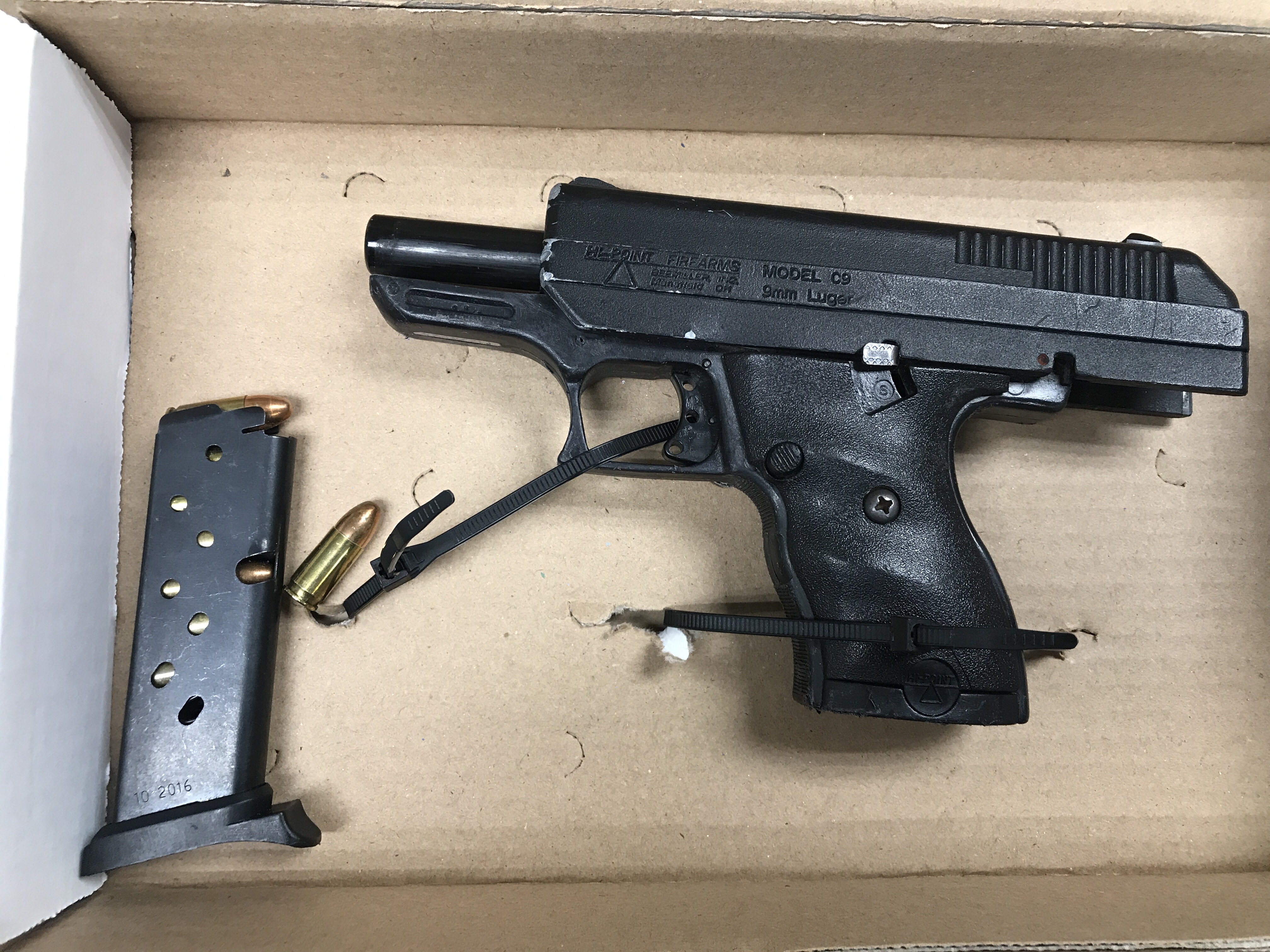
Gun-evidence-box-300x225Last week two Maryland men in their late 20s appeared in federal court on gun charges, and both will end up serving several years in prison.  The first case was heard last Thursday in the Greenbelt federal courthouse, where a 29-year-old man from Suitland pled guilty to two counts of felon in possession of a firearm.  The Prince George’s County man had been convicted of attempted distribution of cocaine in Washington D.C. back in 2014, which made him permanently ineligible to possess a firearm in all U.S. jurisdictions.  Unfortunately for the defendant, law enforcement subsequently found him in possession of a firearm on at least two recent occasions.  In June of 2020 Prince George’s County Police conducted a search of the defendant’s home pursuant to a warrant, and recovered a .40 caliber handgun, ammunition and CDS including buprenorphine and naloxone.  These prescription drugs are used to treat heroin and other opioid addictions, but can be used as illicit substances.  After being advised of his Miranda rights the defendant admitted that the firearm was in his possession.

The defendant was charged with possession with intent to distribute, and offenses related to false prescriptions.  He was also charged with possession of a firearm by a convicted felon, illegal possession of a regulated firearm and possession not marijuana. The possession with intent (PWID) charge was of the variety that comes with a 5-year maximum penalty rather than the 20-year penalty that narcotics cases carry.  Despite the severity of the charges, the defendant was released on bond one day after his arrest at a district court bail review.  The defendant’s lack of prior violent criminal history likely played a role in his release, as did his ties to Prince George’s County.  However, less than 4 months after his release he was arrested again on gun charges.  This time the arrest took place in Washington D.C., and was the result of a traffic stop that turned into a foot chase.  After the defendant was pulled over for running a stop sign, police discovered that he had an active Maryland circuit court arrest warrant stemming from the PG County gun and drug case.  The U.S. Attorney’s press release does not specify why the defendant had the warrant, but it was likely for violating a condition of his pre-trial release or for missing court.  After the defendant was confronted about the warrant, he took off on foot in attempt to fell from police.  Officers then caught the defendant and located a loaded .45 caliber handgun in his jacket pocket.  The feds stepped in not long after his arrest on the D.C. case, and charged both cases together in the Greenbelt federal court.  The PG circuit court case was later dismissed along with the D.C. case, and now the defendant faces up to 10-years in prison on each count when he is sentenced in November of this year.

The second case occurred just one day later in the Baltimore City federal courthouse, where a 28-year-old Baltimore man was sentenced to 57 months in federal prison, followed by 3 years of supervised release for one count of felon in possession of a firearm.  This defendant was originally arrested on state charges after being arrested at the end of 2019.  According to the plea, Baltimore Police officers observed the defendant conduct a drug transaction and then gave chase.  The defendant fled on his bicycle and eventually on foot, but officers caught up with him and found a loaded 9 mm handgun as well as cocaine and fentanyl packaged for sale.  He was charged with possession of a firearm in a drug trafficking crime, illegal possession of a firearm, PWID narcotics and other offenses, though the state case was dismissed after the feds decided to prosecute.  The defendant was prohibited from possessing guns due to felony convictions from 2015 that involved narcotics distribution.


Published on:

medpot-300x188This past week the Maryland House Speaker indicated that lawmakers will pass legislation to put marijuana legalization on the ballot in 2022.  We have known for quite some time that legalization is coming, but this unequivocal statement from a top state lawmaker all but makes it official that Maryland voters will decide whether marijuana becomes legal in November of 2022.  The Speaker announced the formation of a workgroup consisting of ten other state lawmakers, who will hammer out various legalization issues such as taxation, expansion of drug treatment programs and of course the licensing and regulatory aspects of cannabis production and sales.  The group will also tackle criminal law issues such as initiating the dismissal of all open marijuana cases and expanding expungement to include past marijuana convictions.  Lawmakers must also consider the impact of legalization on the state’s traffic laws and a police officer’s authorization to perform an automobile search based on the suspected presence of marijuana.  It may not be a crime to possess small amounts of cannabis, but that doesn’t mean it’s legal.  The suspected presence of contraband such as marijuana currently gives police the legal authority to search a vehicle, though this would undoubtedly change the minute pot becomes legal.

Anyone serving jail time for marijuana related crimes would also stand to benefit from legalization, though it is unclear how this would affect those serving time for marijuana distribution or possession with intent to distribute.  Possession with intent to distribute marijuana a common offense, and it is still classified as a felony in Maryland regardless of the amount at issue.  Many police officers will wrongly arrest a suspect for possession with intent to distribute based on nothing more than packaging and the presence of money or a scale.  Lawmakers must find a way to address possession with intent to distribute assuming cannabis will be a legal substance within the next 15 months.  As regular readers are aware, misdemeanor marijuana possession cases that end with the imposition of a jail sentence are becoming more infrequent.  In addition, many possession cases end up being dismissed due to the difficulty in satisfying the chemical testing requirements in Maryland.  The presence of THC alone is not sufficient to establish that a substance is in fact cannabis.  Hemp is a legal substance in Maryland, and has officially been codified as having an acceptable THC level of .3 percent or less.  Therefore, the presence of THC alone is not enough to distinguish between legal hemp and illegal cannabis.  State prosecutors have essentially been forced to outsource their cannabis testing to private labs, sometimes in other states, or decline to prosecute.  The MSP lab has not regularly been testing the THC percentages of suspected cannabis for quite some time.

Both Virginia and Washington D.C. have officially legalized marijuana for recreational use, and adults can grow their own pot without fear of arrest and prosecution.  Recreational marijuana will not be sold in Virginia until 2024, and therefore it is still a crime to sell or possess with intent to sell.  The Virginia law become effective on July 1 of this year, and now Maryland finds itself behind the curve in the region as it waits to join 18 other states that have legalized marijuana.  The Blog will continue to follow this important issue as we have for the past 8 years since medical cannabis was signed into law.  We will post a follow up article as more information comes out of Annapolis, and we fully expect marijuana to once again be the hottest topic in the next legislative session.  If you have been arrested or charged with any offense in Maryland or Florida contact criminal defense lawyer Benjamin Herbst for a free consultation anytime at 410-207-2598.  Benjamin has extensive experience defending drug cases such as possession with intent to distribute (PWID) and other CDS charges such as delivery and possession of cocaine, heroin and prescription pills.  He also specializes in probation violations and juvenile criminal cases for all types of charges including assault and battery, firearm possession and theft.  Contact Benjamin today to learn what defenses may be available in your case.

Published on:

money-943782_960_720-300x225This past week in the Baltimore federal courthouse a 26-year-old defendant pleaded guilty for his involvement in three separate robberies in the Baltimore metro area.  The first robbery took place in October of 2019 at a Baltimore City pharmacy.  In this particular incident the government presented evidence that the defendant and his co-conspirator entered the pharmacy just as it opened in the morning, and while donning masks, gloves and glasses brandished a black revolver and demanded cash from the safe.  The clerk gave the men over $1,600 and then was bound with zip ties while the pair fled in the victim’s vehicle.

One month later the two defendants committed a second robbery in Anne Arundel County.  This robbery took place at a retail store, where the defendants entered right at closing time.  Once again, the pair were clad in masks and gloves and carrying handguns.  After taking over $3,000 from the store and striking a victim in the head, the defendants fled the scene in the victim’s vehicle.  The final robbery was committed in December of 2019 in Baltimore County restaurant in Parkville.  The defendants entered the restaurant at 7 a.m. just as the shift manager and another coworker were opening for the day, and once again the defendants brandished a firearm and demanded money from the restaurant safe.  After stealing close to $4,000 from the safe and binding the victims with zip ties the defendants fled in one of the victim’s vehicles.

One day after the third and final robbery Baltimore County Police detectives located the stolen vehicle and surreptitiously outfitted it with a GPS tracker.  Two days later police followed the vehicle as it moved and eventually attempted to effectuate a traffic stop.  The defendant abandoned the vehicle and then fled on foot, but was then apprehended a short time later on Harford Road.  After being arrested the defendant agreed to speak to police, and claimed he found the stolen vehicle that day and was merely taking it for a joy ride.  Law enforcement officers obviously were not convinced and ended up charging him with robbery, assault in the first degree, motor vehicle taking and felony theft.  The case was forwarded to the Circuit Court for Baltimore County with additional charges for use of a firearm in a crime of violence and CDS drug charges.  In November of 2020 the case was nolle prossed after the feds decided to pick it up.  While the U.S. Attorney’s press release does not mention the specifics, the feds were likely alerted after local law enforcement discovered the defendant’s involvement in the two other robberies.  A search warrant was executed on the defendant’s phone, and law enforcement found pictures of large amounts of cash on the same day as the first robbery.  Cell phone tracking data also showed the defendant was in the area of the first two robberies on the dates in question.

Published on:

image-15-201x300This week two Baltimore men received federal prison sentences for narcotics distribution, further serving as reminders that the feds are not shy about prosecuting drug cases in Baltimore City.  Neither case seemed especially complex, and both defendants appeared to keep their illegal operations local, but nonetheless the cases ended up in federal court.  Unlike many crimes, drug offenses do not need to be committed on federal property or across state lines in order to be prosecuted in federal court.  The United States Code has strict controlled substance laws, and the feds can choose to prosecute anyone involved with suspected drug dealing.  Normally in Maryland, street level cases are prosecuted in state court by the local State’s Attorney’s Office, but it’s quite a different story in Baltimore City.

The U.S. Attorney’s Office prosecutes a large number of drug and gun cases that would normally be filed in state court, and the two from this week are a classic example.  On July 13, a 41-year-old man from Baltimore was sentenced to 5 years in federal prison for conspiracy to distribute and possess with intent to distribute crack cocaine.  This particular defendant was ultimately jammed up for selling cocaine to multiple confidential informants in a particular area of East Baltimore.  The defendant’s DTO or drug trafficking organization was not particularly large but nonetheless caught the attention of the ATF, and ultimately wound up in federal court.  As part of the plea the defendant admitted to conspiracy to distribute more than 28 grams of cocaine, and also admitted to possessing firearms.

Just one day after the sentence was handed down for the 41-year-old defendant, another Baltimore man learned he would be spending the next 4 years in federal prison for conspiracy to distribute heroin, fentanyl and cocaine.  This particular defendant was being investigated by a joint task force led by the DEA, who joined with Baltimore City Police in gathering evidence to support the defendant’s involvement with a street level drug trafficking organization.  Law enforcement officers were ultimately able to secure a search warrant for the defendant’s residence, and recovered 147 grams of a heroin fentanyl mixture, cutting agents and a press containing cocaine.  According to the U.S. Attorney’s Office, based on the evidence obtained it was reasonable to conclude that the defendant and his co-conspirators distributed more than to distribute more than 3.5 kilograms of cocaine, as well as heroin and fentanyl.  The 5-year sentence may seem low compared to state sentences for narcotics distribution, but keep in mind that there is no parole in the federal justice system.  Defendants typically serve more than 75 percent of their actual sentences compared to state defendants who are eligible for parole on non-violent offenses after serving 25 percent of their time.  There were a total of 25 defendants indicted in this particular investigation, and 22 have pleaded guilty or been found guilty at trial.  In March of this year the defendant’s alleged source of supply was sentenced to 10 years in prison for his role in the conspiracy.

Published on:

fire-1030751_1280-300x199Earlier this week a 19-year-old from the state of Mississippi pled guilty to a federal arson charge stemming from a fire at a home located within Fort Meade.  According to facts presented at the plea the young man poured lighter fluid in various areas of his father and stepmother’s home, including the front door, welcome mat, stairs and the door to his parent’s bedroom.  The defendant apparently lit the fire inside the home and then suffered a leg injury jumping off the rear porch.  Luckily the fire was extinguished without any other injures, and minimal property damage, but the situation obviously could have gone much worse.  After being cleared by paramedics, the defendant was interviewed by the Fort Meade Military Police Department.  He subsequently admitted to spreading accelerant and lighting the fire.  Multiple fire departments and law enforcement agencies were involved in this incident including the FBI, ATF, Howard County State Fire Marshal’s Office and the Anne Arundel County Fire Department.  The case is being prosecuted by the Baltimore office of the United States Attorney, as the arson occurred on federal property.

The defendant is this particular case was found guilty of an extremely serious crime, and faces up to life in prison for his actions.  Arson within a special maritime and territorial jurisdiction under 18 U.S. Code §81 is a felony typically punishable by up to 25 years, but if the fire was started in a dwelling or if any person’s life was placed in jeopardy the maximum penalty becomes life in jail.  In this case the government was able to establish both that the fire was started in a dwelling, and that the victims were placed in jeopardy.  The defendant will certainly not be sentenced to life in prison, and likely much less than 25 years when he is sentenced in few months.  There are probably some underlying issues that must be explored in this type of case, and hopefully the government will take that into consideration when making a sentencing recommendation.

Arson by itself is not the type of crime that is typically prosecuted in federal court, unless the act occurs within a special maritime and territorial jurisdiction.  This includes all United States military bases and federal installations such as Fort Meade, Joint Base Andrews and Aberdeen Proving Ground.  Other charges such as destruction of property government property are also typically prosecuted along with arson pursuant to the malicious mischief section of the U.S. Code.  Had there been property damage the defendant would likely have been charged with destruction of federal property as well.  This offense is a felony punishable by up to 10 years as long as the value of the damage exceeds $1,000.  If the damage is less than $1,000 the offense would be considered a petty offense, and punishable by up to 1 year in jail.

Published on:

pistol-1350484_1280-300x200A 20-year-old Washington D.C. man was recently sentenced to five years in federal prison after he pled guilty to theft of firearms from a federal firearms licensee’s facility.  This offense is a felony punishable by up to 10 years in prison.  The incident occurred back in August of 2019 at a Baltimore County gun store in the Essex area.  According to the plea agreement the defendant and a co-conspirator drove up to the gun store in a stolen vehicle, and repeatedly attempted to ram the front door of the shop with the stolen car.  The defendant then broke one of the store’s windows, entered and then proceeded to throw stolen firearms to the co-conspirator waiting outside.  The two fled the scene and were not apprehended immediately.  Shortly after the burglary the defendant posted on social media about the heist, and was not shy about showing off the stolen guns, gloves and mask he wore.  Law enforcement officers were able to match the social medial video with the store surveillance video, and were aided by distinctive tattoos on the defendant’s forearm.  The social medial videos also showed strings tied around the triggers of the weapons, which the store had used for identification.

As if the police needed more evidence of the defendant’s guilt, it turns out that he was also on GPS monitoring for a Prince George’s County case when he carried out the burglary.  The defendant was charged with armed robbery in 2018 and eventually pled guilty to conspiracy to commit robbery ( a misdemeanor common law offense in Maryland).  He was likely being supervised by parole and probation at the time, as he just pled guilty in May of 2019.  There is currently an active warrant out of the Prince George’s County Circuit Court for a violation of probation, though it is unclear how many years the defendant is backing up.

This case is another example of the feds picking up what would normally be a state case.  Much like bank robbery cases, the feds will typically get involved when gun shops are burglarized, as all arms dealers must be licensed by the federal government and the ATF in particular.  In this case, the defendant was also charged with second-degree burglary, felony theft and malicious destruction of property in the Baltimore County District Court.  An arrest warrant was issued back in 2019 and it appears the warrant remains unserved.  If Baltimore County chooses to prosecute the defendant will be transported to Towson upon completion of his federal sentence.  This of course is assuming that he is not taken to Prince George’s County first.  It will be interesting to see if Baltimore County chooses to prosecute a defendant that has been sentenced for the same act in federal court, and then punished for violating his probation due to that act in another county.  The Blog will follow and may post an article in the future.  In the meantime, stay tuned for any new posts regarding gun and drug charges that are filed in federal court.

Published on:

camera-lens-458045_640-300x199Four Pennsylvania teenagers were arrested last week on the Ocean City boardwalk for multiple charges including disorderly conduct, resisting/interfering with arrest, failure to obey and trespassing.  The incident began when police officers confronted a group that was allegedly vaping on the boardwalk, which is illegal pursuant to Ocean City ordinance.  The encounter then unfortunately escalated into a violent scene where a large bike patrol officer was caught on a bystander’s cellphone camera repeatedly kneeing a restrained suspect in the ribs.  The suspect was already in handcuffs and on the ground when the officer began striking him repeatedly.  The same officer then aggressively moved toward another group of bystanders and appeared to initiate physical contact with at least one individual, though the incident did not escalate further.  All four of the teenagers were released on their own recognizance after being seen by the District Court Commissioner.

The video of the incident quickly generated national headlines, and amongst other things, has many in the community calling for the Ocean City Police Department to adopt a body worn camera policy as soon as possible.  Maryland lawmakers recently passed legislation that will require all state law enforcement agencies to adopt BWC policies by July 2025, but many feel this timeline is far too relaxed.  In response to this recent incident of excessive police force, the Office of the Public Defender sent an open letter to the Ocean City mayor and chief of police urging body camera implementation.  The letter states that the public should not have to rely on citizen’s cell phone videos in order to evaluate police interactions.  Body camera is advantageous to both the police and suspects, as it offers the best reenactment of encounters that involve alleged criminal activity.  When police citizen encounters go south, body cameras have the tendency to exonerate good cops and expose bad ones.  There is no logical reason that all law enforcement agencies in the state cannot implement body camera programs within the next year.  This is especially true for well-funded departments such as the Ocean City Police.  Tourism is booming now that COVID-19 is essentially an afterthought in Maryland, and Ocean City is as crowded as ever as we enter the peak season.

The Blog will continue to follow this case and may post a follow-up article if the officer involved ends up being disciplined.  There is certainly ample evidence to show that his use of force was excessive, and it is extremely obvious from the video that this particular officer was seeking further physical confrontation after he finished kneeing the detained teenager.  There is simple no need for police departments to employ individuals who clearly would rather escalate a situation rather than de-escalate.  Working as a beat cop in a crowded area is not an easy job, and it only takes one ill-tempered officer to put a national stain on the entire department.

Published on:

Gun-evidence-box-300x225Summer is almost in full swing, and with COVID-19 numbers sharply on the decline thousands of tourists have already started to flock to Ocean City to enjoy the surf and sand.  Tourist season in Maryland’s only beachfront town supports hundreds of businesses and creates thousands of jobs, but it also brings a dramatic increase in crime.  Most of the offenses are non-violent in nature and occur in the overnight hours when family vacationers are back in their hotels, but the crime does not go unnoticed.  Year after year the local, county and even state government has made a point to address rising crime in Ocean City, and recently have developed special event zones to combat street crimes.  But increased boardwalk patrols and the threat of arrest can only do so much to deter criminal activity.  Last week was a perfect example of this, as three teenaged defendants were arrested on gun charges after police attempted to break up a large disorderly crowd in downtown Ocean City.  Fortunately, the disturbance did not escalate to an especially violent incident, but based on the police officer’s alleged observations it appears escalation was only narrowly avoided.

According to the Ocean City Police Department, a bike patrol officer that responded to the disturbance observed a 19-year-old Baltimore man in the back of a vehicle actively loading a semi-automatic handgun.  As officers were in the process of detaining the passenger and arresting him for multiple firearm charges, another teenaged male approached and allegedly became hostile toward the police and tried to interfere with the arrest.  This young man turned out to also be 19 but hails from Pennsylvania.  These two young men were both arrested and taken to the Ocean City jail for processing along with an 18-year-old female that was the driver of the vehicle in question.

The defendant from Baltimore was charged with loaded handgun on person, handgun in vehicle and possession of a firearm by a person under 21.  The Pennsylvania defendant was charged with handgun in vehicle and several additional charges for his alleged interference with the police including obstructing and hindering, resisting/interfering with arrest, assault second-degree of a law enforcement officer, disorderly conduct and reckless endangerment.  Both male defendants were initially held without bail by the District Court Commissioner and then released on $50,000 bail when seen by a judge the next day.  The female.  defendant was released on her own recognizance by the commissioner.  All three co-defendants have a trial date on August 3, 2021 in the Ocean City District Court.

Published on:

handcuffs-2102488__480-300x169A veteran officer of the Anne Arundel County Police Department was arrested last week in Howard County on multiple charges including assault second degree, resisting arrest and disorderly conduct.  The 35-year-old corporal from Pasadena has been with the department for 8 years, and was suspended with pay following the arrest.  He currently is scheduled for trial in Ellicott City on July 13, though the case may be postponed or moved to the circuit court before it is resolved.  All of the charges are classified as misdemeanors, but the defendant can elect to have a jury trial if he and his attorney prefer the case to be handled in circuit court.

According to the statement of charges, Howard County Police officers responded to a bar on Washington Blvd. in Elkridge shortly before 2 a.m. after a fight broke out.  As officers dispersed the crowd one person remained on the scene and was showing signs of intoxication.  This intoxicated individual turned out to be an off-duty police officer, and was placed under arrest after failing to comply with the Howard County cops and then allegedly kicking one of them.  The off-duty Anne Arundel officer was taken to central booking in Jessup and released on his own recognizance by the commissioner the same morning.  Assault in the second degree is the most serious charge that the suspended officer is facing, and under Maryland law it carries a maximum penalty of up to 10 years in jail.  A person convicted of second-degree assault in Maryland is also prohibited from owning or possessing a firearm according to the public safety code.  The public safety code in Maryland classifies assault in the second degree as a crime of violence, which can be confusing, as it is not considered a crime of violence under criminal law §14-101 for purposes of parole eligibility.

In Maryland, a defendant who has a conviction for second-degree assault faces a 5-year mandatory sentence if he or she is arrested for illegal possession of a firearm.  Even if the defendant who received probation before judgment faces this mandatory prison sentence if the case was marked domestically related.  In the case of the off-duty Anne Arundel cop, the case is not domestically related and thus he will not lose his ability to own or possess a firearm if probation before judgment is granted (after probation has been completed).  In all likelihood the suspended officer’s lawyer should be able to convince the State to dismiss or nolle pros. the assault charge in favor of one of the lesser charges.  The most likely outcome in this case would probably look something like a plea to the disorderly conduct or a STET with the condition that the defendant complete some sort of alcohol treatment.  The officer is likely a first-time offender and will certainly face discipline for his actions from his employer, which is something the prosecution and judge should consider.  On the other hand, the judge and State may point out that a police officer should be held to a higher standard even when off-duty.  It will be interesting to see how this case plays out, and the Blog will post a follow up article upon resolution of the matter.

Published on:

graphics-882726_640-300x207Within the same week in mid-May two former government employees in Maryland were found guilty of felony theft while on the job.  The first guilty finding came by way of a two-day jury trial in Somerset County that resulted in a guilty verdict for both counts in the criminal information charging document.  A jury agreed with the State’s Attorney’s theory that the former of Princess Anne employee was responsible for $100,748.93 in missing cash that was received at Town Hall but never deposited into the town’s operating account.  Prosecutors introduced evidence showing the defendant had deposited over $43k into her personal account, but the jury must have believed the former employee stole the remaining $58k as well.  The difference between prosecuting the defendant for the full $100k+ and just the $43k in her account is twofold.  First, the potential punishment for theft over $100k is double the 10-year maximum provided under the Maryland law for theft $25k to $100k, and the offense has a higher score in the sentencing guidelines.  Assuming the defendant has no prior criminal record, she faces a guideline sentencing range of probation to 2 years in prison, while the lesser theft offense would have carried a guideline range of probation to 6 months.  Second, the State is now justified in seeking the full amount of restitution from the defendant, which the judge will almost certainly order and make a condition of her probation.

While the former town manager will only be sentenced on one of the counts due to the doctrine of merger and will not end up serving anywhere close to the 20-year maximum provided by law, she does face a realistic possibility of serving several months in jail or even at the division of corrections.  The case has been postponed for sentencing and a pre-sentence investigation or PSI has been ordered.  Two days after the Eastern Shore jury found the Somerset County defendant guilty a former Air Force employee pleaded guilty to theft of government property.  The 60-year-old Prince Georg’s County was working as a civilian travel coordinator for the Air Force, and was responsible for planning and scheduling congressional travel and approving expenses for trip escorts.  The defendant held a government issued credit card for employment purposes, which he misused secure cash advances that were then deposited into a work-related bank account that he controlled.  According to the plea the defendant then wrote checks to himself and deposited the same into his personal bank account for living expenses, family vacations, a Harley motorcycle and a baby grand piano.  All told the former Air Force employee stole over $750k and cost the government over $1 million after factoring in banking and services fees for the cash advances.  A search warrant was executed at his Brandywine home, and over $15k in cash was seized.    The defendant faces up to 10 years in prison and will be ordered to pay the full amount of restitution when he appears for sentencing at the Greenbelt federal courthouse in September.

The Blog will continue to follow these two cases and may post a follow up article after the two defendants are sentenced.  We will continue to monitor cases involving public corruption, fraud and theft in Maryland and in Florida and are available anytime to answer legal questions.  Benjamin Herbst is a criminal defense lawyer who specializes in theft, misconduct in office, counterfeiting and fraud.  He has successfully represented hundreds of clients charged with a range of offenses from shoplifting and employee theft to embezzlement and felony theft scheme.  Contact Benjamin anytime at 410-207-2598 or at 954-543-0305 in Florida anytime for a free consultation.

Contact Information